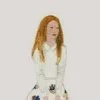

Winter walks
Winter walks feel refreshing. Though the temperature is low, it's clear and windless. I walked through the town where I grew up.
Located just south of Tokyo, Yokohama City is a highly convenient residential area developed during the rapid population growth of Japan's high economic prosperity period after 1960. Residential areas spread across mountain tops and slopes, creating a city of slope. Small houses, like matchboxes, line the streets. My house sat atop a hill; from the second-floor window, Mount Fuji could be seen in the distance. Following the path to downhill, it led anywhere within walking distance, or for places further away, buses and trains are very convenient.
Today's walk takes me along the path to the station. Around the station, people boarding and disembarking trains mingle with the evening grocery shoppers. Cafes are always packed with students studying and people meeting for work. At the central crossroads of the station stands a traffic signal (an audible signal). Beyond just green and red lights, it emits sounds to help visually impaired people cross the road safely. “Piyo piyo (chirping)” indicates north-south, while “Kakko (cuckoo)” signals east-west, allowing you to determine the crossing direction by sound. Both “Piyo piyo” and “Kakko” are bird sounds, apparently chosen to resonate clearly without being drowned out by the noise. The signal stops and starts people, buses and cars at precise intervals, guiding us. Everyone moves in perfect order. Somehow, becoming part of this movement makes me feel oddly amused, and I chuckle to myself. You just don't find this kind of regularity in the United States (laugh).
After passing the busy station where people and cars crisscross, the crowds gradually thin out. Leaving the shopping district behind and entering the residential streets, I now encounter four students in uniforms riding their bicycles side by side, chatting as they approach at a leisurely pace. A mother riding a mommy bike with her child on board, hummed a song as they pass by. Watching the two of them, I suddenly recalled a story about a baby monkey. At a zoo in Japan, a baby monkey named Punch was released from the artificial rearing area to Monkey Hill, making his debut into monkey society. People all over the world were moved by the sight of him trying to fit into the group while clinging to Oran Mama ( a orangutan plush toy), which serves as a substitute for his mother, as a source of comfort. Well, let’s get back on track. Soon, the river comes into view. By the time I reached the tranquil rural area of Jike-cho, where old nature remains preserved, the sun had begun to dip, its setting rays beautifully coloring the valley landscape. It was about time to turn around and head home.
Actually, Yokohama City was destroyed by American air raids in 1945 and remained under their occupation until 1961. In other words, Japan was released from occupation around the time I was born, and began moving toward economic development aimed toward the international community. The Japan I knew was a new Japan granted independence by the United States. My grandparents and parents experienced Imperial Japan under the sovereignty of the Emperor before and during the war, and a democratic nation under Allied occupation after the war. They lived through a pivotal historical moment: the shift to popular sovereignty and the fundamental restructuring of society's rules imposed by the United States within a very short period.
The adults said they did not want the children who would carry the future to experience the same hardships, nor did they wish for them to suffer from hunger. They kept past memories locked away in their hearts and lived with hope for a new future and peace. I grew up comfortably, but when it came to meals, my parents were very strict. If even a single grain of rice remained in my bowl, I was reprimanded. My parents lived through times of food shortages, so they taught me that food is not always guaranteed. Work hard and be grateful.
Back in the day, my family often gathered with relatives. I remember at banquets, the fathers would raise their cups and sing the military song “Brothers' Bond.” As a child, I'd think, “There they go again, the grandpas got drunk again, singing that song!” Looking back now, the sight of fathers and grandfathers singing that song seemed to carry a certain sense of pathos of wartime. Nowadays, military songs are a sensitive issue due to Japan's historical background, leading to self-regulation. As a result, younger generations are unaware of the existence of such songs and remain apathetic of the historical sensitivities. The national flag faces similar constraints, with consideration given to its historically negative aspects. There is no casual habit of displaying it like the American flag.
Let’s also talk about Okinawa. Okinawa is a beautiful island surrounded by coral reefs, with a folk art culture that dates back to the Ryukyu Kingdom era. However, the island was reduced to ashes during the war. After the war, the entire island was placed under U.S. military administration, with its rich natural environment and living spaces taken away to make way for military base construction. And things still haven't changed. The suffering endured by the people of Okinawa must have been beyond words. Yet even in the midst of such despair, they focus creating vibrant glass crafts using scrap materials, such as melting down empty soda and beer bottles discarded from U.S. military bases to reuse them. People in the Tsuboya district, the birthplace of Okinawan pottery (Yachimun) rebuilt their daily utensils amidst the rubble and steadfastly preserved their traditions to ensure the flame of their heritage never died out.
They survived by embracing their native dialect “Nuchi do Takara” (Life is the ultimate treasure.).
A light glows in the matchbox house.
Small happiness dwells within.
And the family make their way home.
Welcome home.
I pray for such peace.
Thank you so much for reading my newsletter March 2026. I hope you find something that resonates with you or sparks new thoughts.
-Yuh Okano
My monthly scarf is “A little monkey Punch in the matchbox house.”